How Does a GSM Gate Opener Work? A Simple Explanation
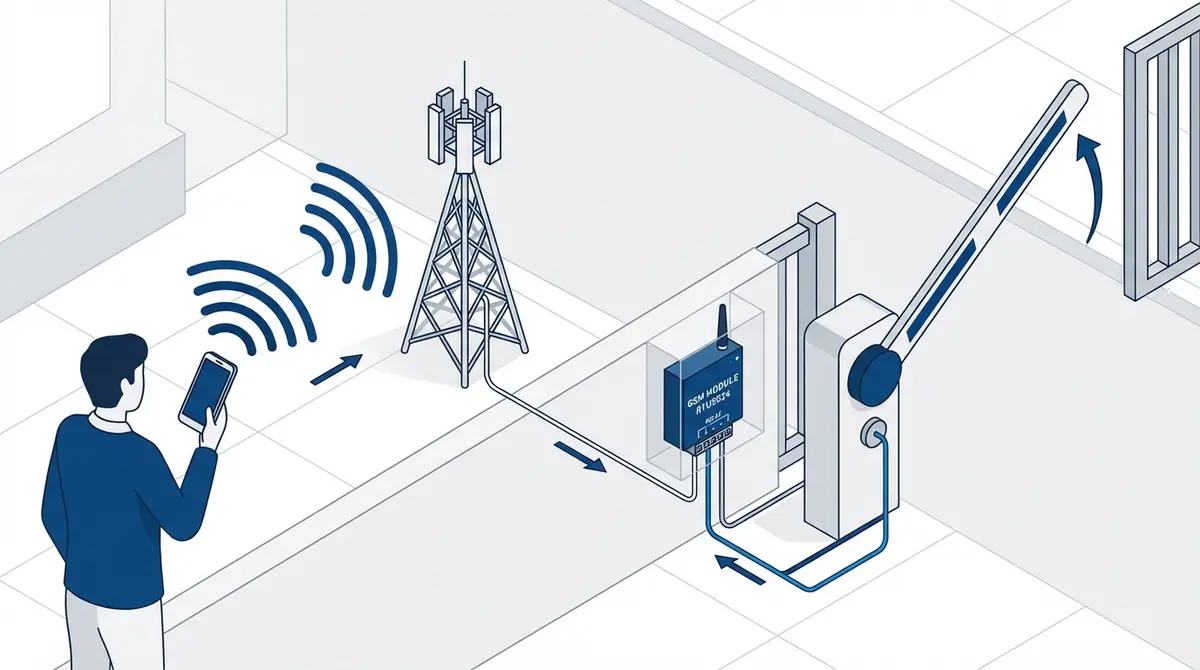
How GSM gate opener modules work, explained step by step. From the phone call to the relay click to the gate opening. Covers the signal path, SMS command system, GSM vs WiFi vs Bluetooth comparison, key components, and common use cases for residential, commercial, and rental properties.
You've seen the product listings: a small blue box with an antenna that somehow opens your gate when you call it. But how does a circuit board with no internet connection, no WiFi, and no Bluetooth actually know when to open a gate?
What Is a GSM Gate Opener?
A GSM gate opener (also called a GSM relay controller, cell phone gate opener, or GSM gate controller) is a small electronic module that uses the cellular phone network to control a relay. According to manufacturer documentation, these devices contain a GSM/LTE modem, a SIM card slot, a programmable relay output, and a microcontroller. The module connects to your existing gate motor's control board and acts as a remote "button press" when triggered. Unlike WiFi or Bluetooth controllers, GSM modules work anywhere with cellular coverage without needing your home internet, a router, or a cloud service.
The Signal Path: From Phone Call to Open Gate
Here's what happens when you call your gate opener:
- 1.You call the module's phone number. The GSM gate opener has its own SIM card with its own number, just like a second phone.
- 2.The module checks your number. The microcontroller compares the caller ID against the authorized list. According to RTU5024 specifications, this list holds up to 999 numbers.
- 3.Authorized? The relay closes. The relay physically connects the COM and NO terminals for a set duration. Unauthorized callers are ignored.
- 4.The relay triggers the gate motor. The relay's terminals are wired to the gate motor's "open" input. When the relay closes, the motor sees it as a button press and opens the gate.
- 5.The module rejects the call. After detecting an authorized caller, the module drops the call after one ring. You're never connected, so the call is free.
- 6.The relay releases. After the set duration (0.5 to 9.5 seconds), the relay opens. The gate motor completes its travel independently.
The entire process takes less than 2 seconds.
SMS Commands: The Configuration Layer
Besides phone calls for opening, GSM modules accept SMS commands for configuration: password management, user authorization, relay timing, access control, and signal diagnostics. All commands follow a structured format with your password and hash delimiters.
For the full command list with examples, see the RTU5024 SMS command reference.
GSM vs. WiFi vs. Bluetooth Gate Controllers
| Feature | GSM Module | WiFi Controller | Bluetooth |
|---|---|---|---|
| Range | Anywhere with cellular | Home WiFi range | ~10 meters |
| Internet required | No | Yes | No |
| Annual cost | EUR 5-15/year (SIM) | Often subscription | None |
| Max users | 200-999 | Varies | Varies |
| Works during internet outage | Yes | No | Yes |
| Remote access | Yes (phone call) | Yes (app + cloud) | No |
GSM modules excel when you need gate access from anywhere without home internet, when you support many users, or when reliability matters more than convenience.
Key Components Inside a GSM Gate Opener
GSM/LTE modem
The cellular radio. 2G modules use SIM800/SIM900 chipsets. 4G modules use SIM7600 series. Handles call detection, SMS processing, and network registration.
SIM card slot
Holds the SIM that gives the module its phone number. No data plan needed because the module only uses voice and SMS.
Microcontroller
The firmware brain. Stores the authorized number list, processes commands, manages relay timing, and makes all authorization decisions.
Relay output
Electromagnetic switch rated 3A/240VAC. Physically connects COM and NO terminals to trigger the gate motor's control input.
Antenna
External SMA antenna for cellular reception. Signal quality directly affects reliability (0-31 scale via CSQ command).
Common Use Cases
Residential gates and garage doors
One module, one gate, a handful of family members. Call to open, gate closes on its motor's timer.
Apartment buildings and offices
Dozens or hundreds of users sharing one gate. 200-999 user capacity handles this without a cloud service.
Airbnb and vacation rentals
Add guest numbers before arrival, remove after checkout. Waferstar GSM-KEY supports auto-expiring time-limited access.
Remote agricultural gates
Farms and rural properties where WiFi doesn't reach but cellular does.
Now That You Understand How It Works
The technology is straightforward: a SIM card, a relay, and a list of authorized numbers. The complexity comes from managing that list through SMS commands. GateOpener replaces those commands with a visual interface.
- Works with all major modules: RTU5024, Waferstar GSM-KEY, Callny G202
- No memorizing commands: visual buttons, sliders, and forms
- EUR 4.99 one-time, no subscription, no cloud
Frequently Asked Questions
Does a GSM gate opener need internet?
No. GSM gate openers use the cellular network (voice and SMS), not internet. They work anywhere with mobile signal.
Is it free to open the gate?
Yes. The module rejects the call after one ring. No airtime charged. SMS commands cost your standard SMS rate.
How many people can use one gate opener?
RTU5024: 999, Waferstar: 200+ temporary slots, Callny: 999. See the comparison for details.
What happens during a signal outage?
The module can't receive calls. The gate stays in its current state. When signal returns, the module reconnects automatically.
Can someone hack my GSM gate opener?
The main security is the authorized number list. Only stored numbers trigger the relay. Change the default password after setup and avoid AA (allow all) mode.
Sources
Manufacturer Documentation
Related Content
Ready to ditch SMS commands?
GateOpener replaces cryptic codes with a clean interface. One app for every GSM gate module. No subscription, no account needed.
Get GateOpenerRelated posts
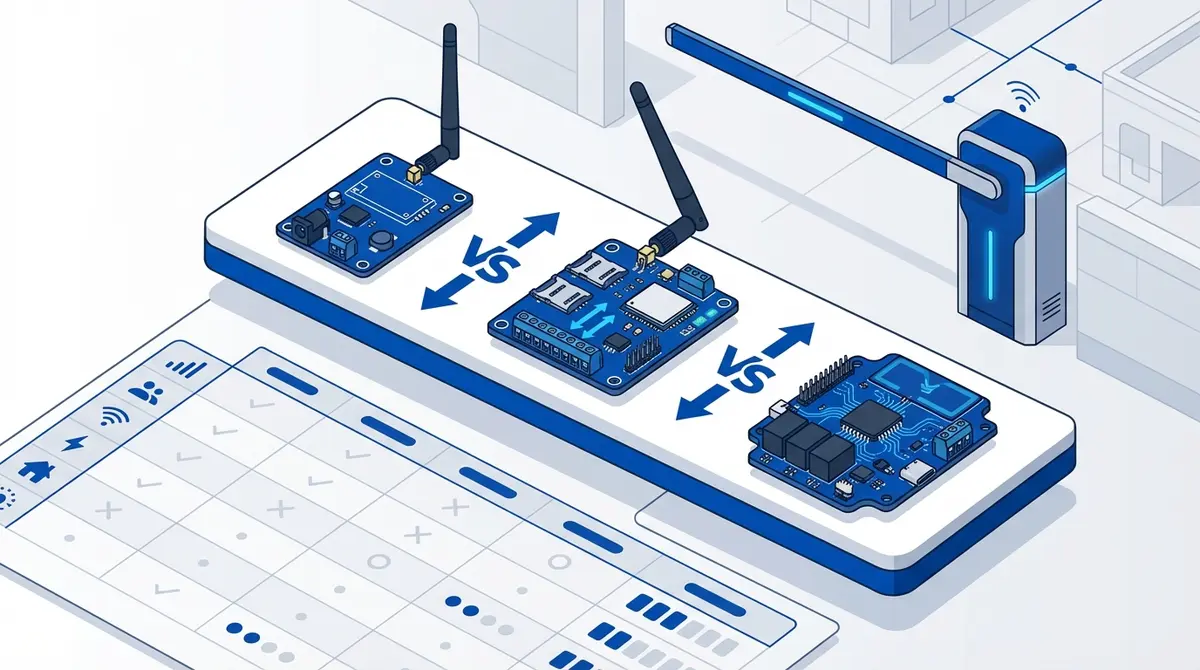
Best GSM Gate Opener Modules in 2026: Complete Comparison
RTU5024 vs Waferstar GSM-KEY vs Callny G202: users, relays, access control, SIM type, 4G, price. Which GSM gate opener module is best for your setup?
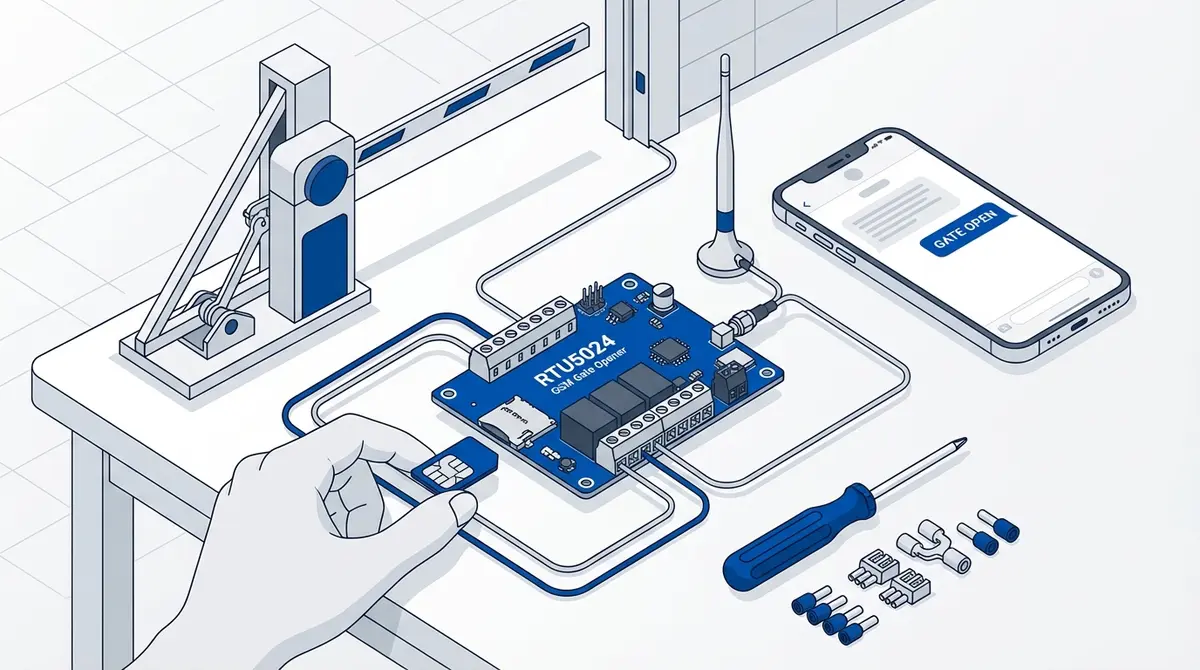
How to Set Up Your RTU5024 GSM Gate Opener
Complete RTU5024 setup guide: SIM card prep, relay wiring, password change, adding users, and testing. Covers all RTU5024 variants with step-by-step SMS commands.
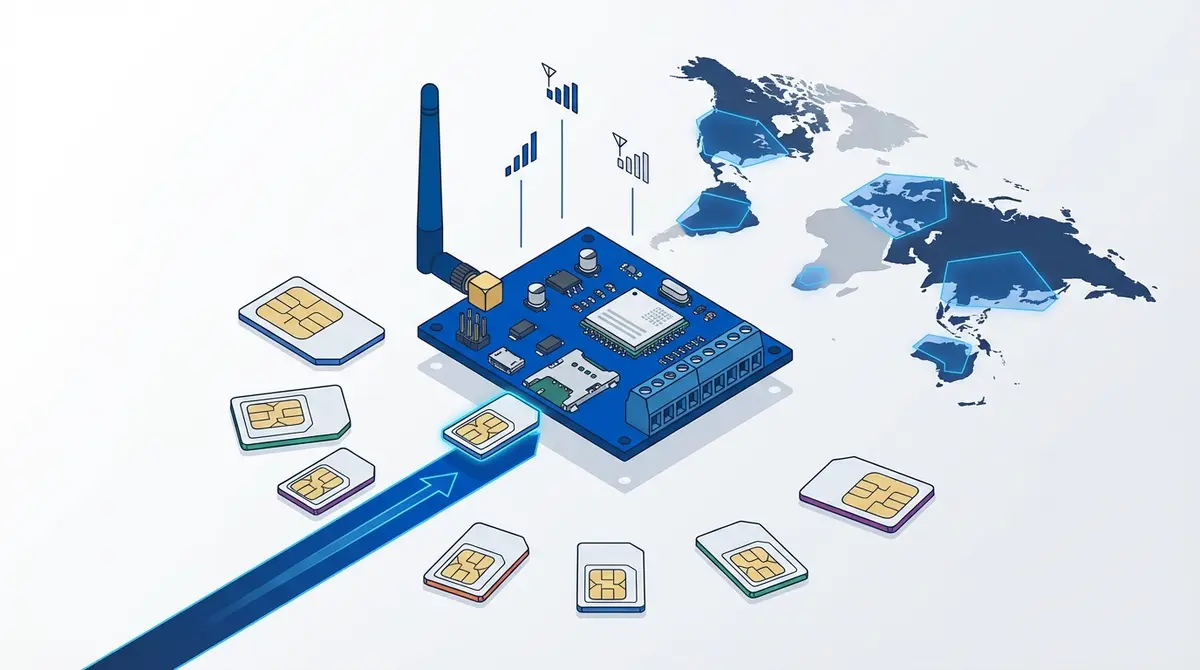
Which SIM Card Works Best for GSM Gate Openers?
SIM card guide for GSM gate openers: sizes, prepaid vs contract, PIN removal, 2G shutdown status, and carrier picks for UK, NL, DE, US, FR.